Free tools
Home Inventory Sheet
Get organized in 30 minutes. Use this free Home Inventory Sheet to list what you have, track items, and share clear details so you can get more accurate moving estimates from licensed movers.

Why an inventory sheet helps (and saves money)
A clear inventory makes your move planning easier and your estimate process more accurate. When a mover can see what you have, they can estimate weight, time, and supplies more realistically.
MoveLantern is a free matching + information service—not a moving company. We help you plan a move and connect with licensed, vetted movers for local, long-distance, or interstate transport.
An inventory also reduces stress. You’ll know what’s packed, what’s missing, and what needs special handling (fragile boxes, electronics, furniture, mattresses, etc.).
And if you’re comparing costs, you’ll be comparing apples to apples. Without a list, estimates can vary wildly just because details were missing.
Download & use the Home Inventory Sheet
You can copy this structure into a document or spreadsheet, then fill it in room by room. If you prefer, start with just the big items first—dressers, beds, couches, tables—then do the smaller boxes.
Tip: Use consistent categories so it’s easy to read. Example categories: “Bedroom,” “Kitchen,” “Living Room,” “Office,” “Bathroom,” and “Other.”
Keep everything factual. Avoid guessing “perfectly.” Estimate quantities and condition as best you can; your written inventory helps movers prepare a good-faith estimate.
Fill it in step-by-step (room-by-room)
1. Start with one room. Set a timer for 20–30 minutes and capture what you can.
2. For each item, write: Item name, quantity, rough size (small/medium/large), and condition (good/fair/needs repair). If an item is fragile, add “fragile.”
3. Estimate how items are stored. Example: “in boxes,” “on shelves,” “hanging,” or “loose.” This helps movers plan packing/unpacking time.
4. List boxes you already packed. If you don’t know the weight yet, don’t worry. Add the box count and a short contents note like “kitchen dishes—8 plates per box.”
5. Make a “Special Items” mini-list (even if it’s short):
- Piano / organ / pool table
- Motorcycles / grills / bicycles
- Firearms (ask the mover for their policy—rules vary)
- Antiques, art, mirrors, large TVs
- Plants, chemicals, aerosols, fuels (these are often restricted)
- Safes (especially heavy safes)
6. Add photos if it helps. Not required, but it can help identify large items and dimensions when you request an estimate.
7. Keep one version for your records. You’ll want this if you need to verify contents later.
If you’re moving interstate, keep in mind: household goods transport must be performed by movers registered with the FMCSA and they should have a USDOT number. Always verify licensing before hiring.
Inventory Sheet template (copy/paste)
Below is a practical template you can copy into a spreadsheet or document. Fill in one room at a time.
ROOM: ____________
- Date started: ____________
- Notes about this room (stairs, narrow hall, parking, elevator): ____________
Item 1
- Item name: ____________
- Quantity: ____________
- Size category: Small / Medium / Large
- Condition: Good / Fair / Needs repair
- Location: Closet / Shelf / Floor / Hanging / On counter / Other: ____________
- Packing status: Unpacked / Packed in box(es) / Packed in bags / Disassembled
- Fragile? Yes / No (if yes: fragile details) ____________
Item 2
- Item name: ____________
- Quantity: ____________
- Size category: Small / Medium / Large
- Condition: Good / Fair / Needs repair
- Location: ____________
- Packing status: ____________
- Fragile? ____________
Box list (optional but helpful)
- Box # / Label: ____________
- Contents summary: ____________
- Room destination: ____________
- Approx count or key items: ____________
Repeat the room section for each room.
SPECIAL ITEMS (separate list so nothing gets missed)
- Item: ____________
- Approx dimensions or “needs stairs/blanket” note: ____________
- Fragile? Yes / No
- Notes for mover: ____________
MEASUREMENTS (quick estimates are fine)
- Largest item length/width: ____________
- Stair count: ____________
- Elevator? Yes / No
- Doorway width (if known): ____________
- Parking distance from door (estimate): ____________
When you share your inventory, you’re helping the mover prepare an estimate. Estimates are planning tools, not promises—your written estimate from a licensed mover is the number that matters.
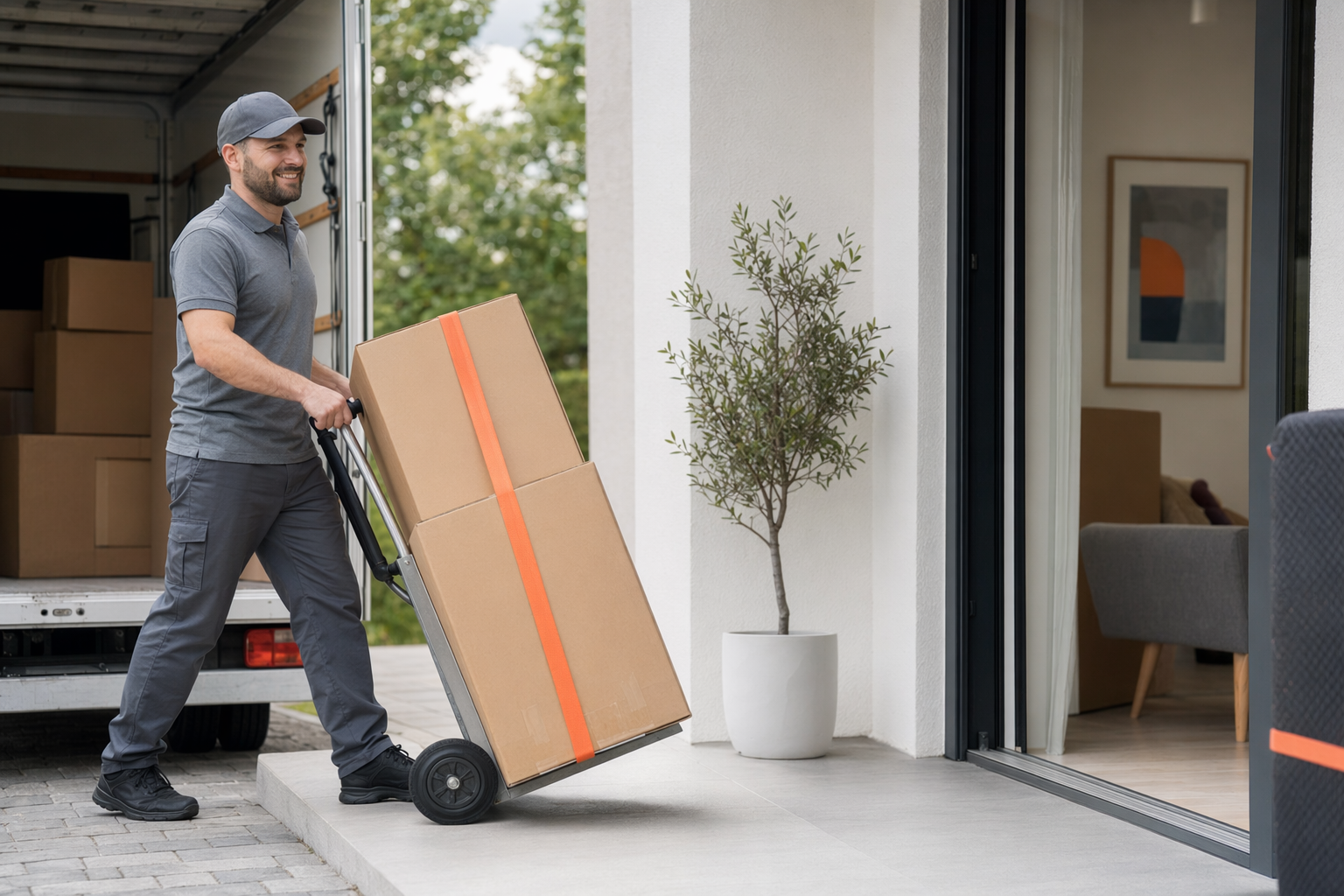
Use your inventory to get better estimates (without surprises)
When you request estimates, ask for them to be written and clearly explained. Moving companies may offer different estimate types.
- Binding estimate: the mover locks in a price in writing before the move.
- Non-binding estimate: a good-faith guess that can change.
- Not-to-exceed / guaranteed-not-to-exceed: the most you should pay (this is designed to protect you).
Costs vary a lot. Typical planning ranges for US moves often look like this: local moves of a 1–2 bedroom home roughly $400–$1,500; local 3–4 bedroom moves roughly $1,000–$3,500; long-distance/interstate moves roughly $2,000–$8,000+ depending on weight and distance. Professional packing often adds roughly $300–$2,000+ and specialty items like a piano can add $200–$800+ on top.
Important: these are typical ranges only. Your real price depends on how much you have, how far you’re going, the season, and the city/state. Always get a written estimate from a licensed mover.
Avoid moving scams (inventory + verification works together)
A detailed inventory helps you spot red flags. If a mover won’t base pricing on your inventory, avoids a written estimate, or pressures you for cash, pause.
Watch for common scam patterns:
- “Lowball” quote by phone, then suddenly much higher later
- No written estimate
- Asking for a large cash deposit
- Refusing to do a basic phone/video/in-person walkthrough (common for more accurate pricing)
- “Hostage load” behavior—demanding extra money to release your belongings
Before you hire, verify licensing. For interstate moves, household-goods carriers must be registered with the FMCSA and have a USDOT number. Ask the mover for their USDOT number and verify it on the FMCSA site.
MoveLantern helps you match with licensed, vetted movers. Still, you’re in control—verify independently before signing anything.
Use this free room-by-room inventory to organize your items, share clear details, and get more accurate planning estimates from licensed movers—MoveLantern is free matching, not a moving company.
FAQ
Common questions
Do I need to list every tiny item for the inventory sheet to be useful?
No. Start with the big items and every box you have packed. Then add smaller items if they’re numerous, valuable, fragile, or unusual. The goal is to give movers enough detail to estimate weight/time accurately.
Can I use this inventory sheet for both local and long-distance moves?
Yes. The same room-by-room approach works for local and interstate moves. For interstate moves, your inventory can be especially helpful because estimates often depend heavily on total volume/weight.
What’s the difference between a binding and non-binding estimate?
A binding estimate is a price the mover locks in, written before the move. A non-binding estimate is a good-faith guess that can change if the mover finds more items, higher weight, or extra access needs.
How do I share my inventory with a mover?
Copy the inventory into your estimate request notes or upload it if the mover accepts files. Include your room list, box labels (if you have them), and any special items. Never share sensitive documents.