Services
Specialty moving - pianos, safes, art, and the awkward stuff
Specialty items need special handling, and that usually means a separate plan, separate equipment, and a separate price. MoveLantern is a free matching service, not a moving company, so you can compare licensed specialty movers with more confidence.
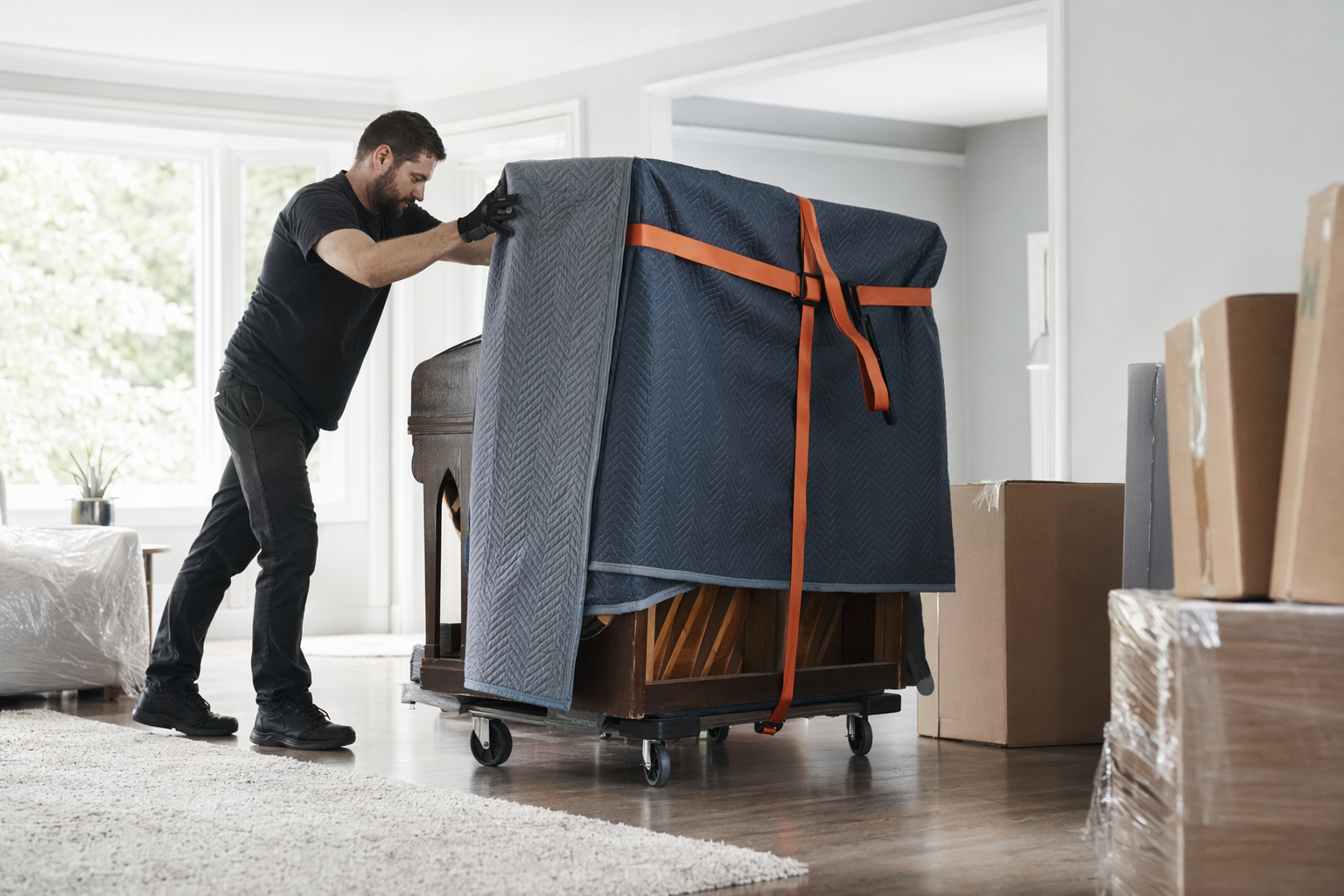
What counts as specialty moving
Specialty moving is for items that are heavy, awkward, fragile, or hard to carry safely. Think pianos, gun safes, pool tables, gym equipment, large sculptures, fine art, antiques, and oversized furniture.
These items often need more than a normal truck and a couple of movers. They may need dollies, straps, ramps, padding, hoists, or custom crating. For art and antiques, the mover may also plan for temperature, vibration, and extra protection.
If your item is going across state lines, the mover must be registered with the FMCSA and have a USDOT number. Always verify the license yourself before hiring.
Why specialty moves cost more
Specialty items take more time, more skill, and more risk management than a standard move. The crew may need extra people, special tools, a stair carry, or a custom route out of the home.
Typical ranges, varies a lot, get it in writing: a piano move often runs about $200-$800+ on top of the move; professional packing can add about $300-$2,000+; a local 1-2 bedroom move is often about $400-$1,500; a local 3-4 bedroom move is often about $1,000-$3,500; long-distance or interstate moves are often about $2,000-$8,000+ depending on weight and distance.
The real price depends on the item, the stairs, the distance, the season, and the city or state. The only number that counts is a written estimate from a licensed mover.
How to get the right estimate
The best specialty movers usually want photos, dimensions, and a quick walkthrough before they price the job. That helps them understand access points, narrow halls, elevators, stairs, and whether anything needs crating or disassembly.
- Gather basics: what the item is, approximate size, and where it is going from and to.
- Note access details: stairs, elevators, long walks, narrow doors, parking limits, or hard turns.
- Ask for a written estimate type in plain words: binding estimate - a price the mover locks in, in writing, before the move; non-binding estimate - a good-faith guess that can change; not-to-exceed / guaranteed-not-to-exceed - the most you'll pay, which protects you.
- Compare what is included: labor, equipment, packing, crating, stair carries, and extra stops.
- Ask for the bill of lading - the contract and receipt for your move - before moving day.
MoveLantern can help you get matched with licensed, vetted movers, including movers who speak your language when available.
How to check a mover and avoid common scams
Specialty items are a common place for lowball quotes and surprise charges, so check carefully. A mover that carries household goods across state lines should have a USDOT number and FMCSA registration, and you can look that up yourself before you book.
Be cautious if a mover refuses a written estimate, skips a video or in-home survey, asks for a large cash deposit, or gives a price that sounds far lower than everyone else. Those are common warning signs.
Also ask about valuation - the level of liability coverage your mover provides, which is NOT the same as insurance. For fine art, antiques, or high-value items, ask exactly what protection is included and what is not.

A real-life planning example
A family moving into their first US home had a piano, a large safe, and framed artwork. They took photos, measured doorways, and used MoveLantern to compare a few licensed specialty movers who could explain the process in plain language.
One mover offered a written not-to-exceed estimate after a video survey and explained how the piano would be padded and strapped, while another gave only a vague number by phone. The family chose the clearer option, verified the mover’s USDOT number, and felt ready because they had the plan in writing before moving day.
That kind of preparation turns a hard item into a manageable one. A move is a fresh start, and the right specialist helps keep it that way.
Start with the item, then build the move
If you are moving one difficult item or a whole home with a few special pieces, start early and be specific. The more exact you are about the item and the access, the better the estimate process works.
You can browse more planning help in our moving costs guide and moving timeline, or go straight to services to see how matching works. MoveLantern is free for people who are moving; participating movers pay a flat fee to join the network.
Specialty moving is for hard-to-move items like pianos and safes, and the safest next step is to compare licensed movers, get a written estimate, and check the USDOT number yourself.
FAQ
Common questions
Do specialty movers pack the item too?
Often yes, but not always. Some movers include protective wrapping, disassembly, or custom crating, while others price those services separately, so ask what is included in writing.
Can I get a price over the phone?
Sometimes you can get a rough range, but specialty items usually need photos, measurements, or a video survey for a useful written estimate. A vague phone number is not enough to rely on.
How do I know a specialty mover is legit?
For interstate moves, check the mover’s FMCSA registration and USDOT number yourself. Also ask for a written estimate, confirm what equipment they will use, and watch for pressure tactics or big cash deposits.