Help
What Movers Won't (or Can't) Move
Some items are not safe, allowed, or practical for movers to take. Here’s the plan: check your belongings early, sort the hard items, and get a written answer from a licensed mover before moving day.
Why some things are off-limits
Movers have to follow safety rules, road rules, and company policies. That means some items cannot go on the truck at all, while others may be moved only with special handling, extra packing, or a written agreement.
This is normal. It does not mean your move is impossible. It means you want clear answers early so you can plan what to sell, ship separately, move yourself, or leave behind.
MoveLantern is a free matching service, not a moving company. We help you find licensed, vetted movers and compare options, including movers that can work in your preferred language.
- Some items are unsafe to transport together with household goods.
- Some items need special packing, extra labor, or extra paperwork.
- Rules can vary by mover, state, and whether the move is local or interstate.
Common items movers usually won’t move
Most movers will refuse items that are dangerous, illegal, or likely to cause damage. That often includes fuel, explosives, fireworks, ammunition, propane tanks, and many flammable liquids.
They may also refuse perishable food, live plants, pets, irreplaceable documents, cash, and very fragile or high-value items if they are not packed the right way. Some movers also set limits on alcohol, cleaning chemicals, paint, aerosols, and batteries.
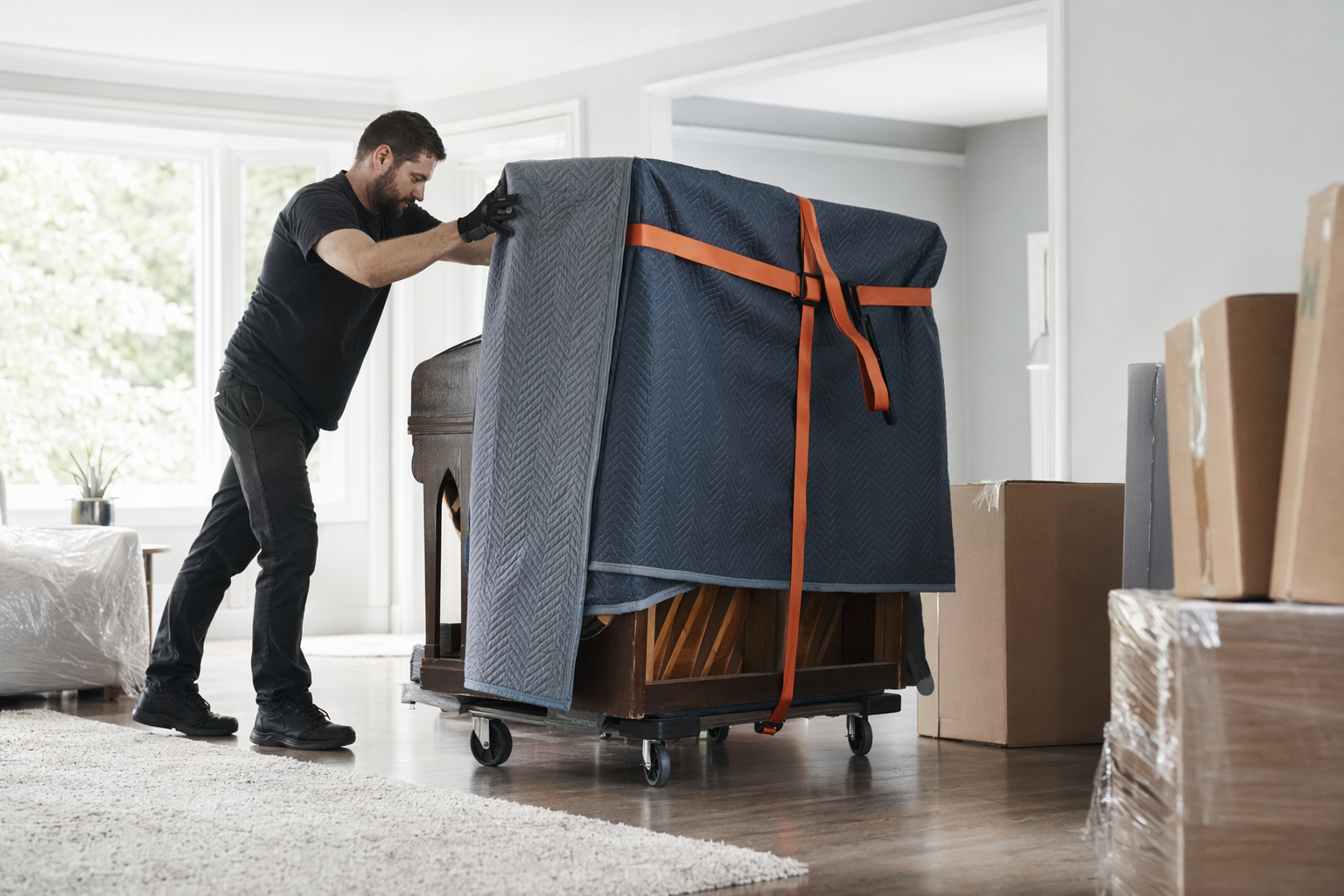
Specialty items can be a different story. Pianos, pool tables, large safes, hot tubs, and artwork may be moved by a company that has the right equipment and training, but they are usually handled as a special job with separate pricing.
- Hazardous materials: movers usually cannot take them.
- Personal essentials: keep documents, keys, meds, and daily items with you.
- Specialty items: ask in writing if the mover can handle them.
What to do with the items movers can’t take
Start with a quick sorting pass. Make three piles: move with the truck, handle another way, and ask the mover about.
- Walk room by room and list anything that looks restricted, valuable, fragile, or hazardous.
- Check labels on cleaners, paint, batteries, fuel, and aerosols.
- Set aside documents, jewelry, cash, keys, and medications to carry yourself.
- Ask the mover, in writing, what they will not move and whether they offer special handling for large items.
- Decide early if you will donate, sell, recycle, or discard anything they cannot take.
If you are moving long distance, do this even earlier. Interstate movers that carry household goods must be registered with the FMCSA and have a USDOT number. You can verify that number yourself before hiring anyone.
- Ask for the mover’s written list of prohibited items.
- Keep a simple inventory of anything valuable or unusual.
- Plan a separate ride for essentials you need right away.
How estimates work when you have special items
Special items can change the price, so get the details in writing. A mover may want photos, a video survey, or an in-home look before giving an estimate.
Plain English: a binding estimate is a price the mover locks in, in writing, before the move. A non-binding estimate is a good-faith guess that can change. A not-to-exceed, or guaranteed-not-to-exceed, estimate is the most you’ll pay, which protects you.
Typical U.S. moving costs vary a lot. A local move for a 1–2 bedroom home is often roughly $400–$1,500. A local 3–4 bedroom move is often roughly $1,000–$3,500. Long-distance or interstate moves are often roughly $2,000–$8,000+ depending on weight and distance. Professional packing is often roughly $300–$2,000+, and specialty items like a piano are often roughly $200–$800+ on top. These are planning ranges only, not quotes. The real price depends on how much you have, how far you are going, the season, and your city and state.
- Ask whether the price includes stairs, long carries, or shuttle trucks.
- Get any special-item charge in writing.
- Do not rely on a verbal price.

How to avoid trouble with mover rules
A good mover will explain limits clearly and put the important parts in writing. Be careful with lowball prices, large cash deposits, no written estimate, or a mover who will not do a survey of your home or video walkthrough.
Watch for the hostage load problem: a mover holds your belongings until you pay more than agreed. Protect yourself by choosing a licensed mover, getting a written estimate, and keeping copies of the bill of lading — the contract and receipt for your move.
Also remember that valuation is the level of liability coverage your mover provides, which is not the same as insurance. Ask what is covered, what is excluded, and how claims work before you book.
- Get the mover’s USDOT number for interstate jobs and verify it yourself.
- Read the bill of lading before signing.
- Keep your own list of what is being moved.
A quick story from a planned move
One family setting up a first home in the U.S. had a few problem items: a propane tank from an old grill, a large dresser mirror, and a small safe. Instead of waiting until the last minute, they asked for help early, got matched with licensed movers who could speak with them in their preferred language, and learned which items needed special handling.
They kept passports, medications, and daily essentials with them, sold one bulky item, and got a written estimate that explained the special-item charges. Because they checked the mover’s license and asked clear questions up front, move day was simpler and the family knew what was traveling on the truck.
- Early sorting saves time on moving day.
- Written answers matter more than verbal promises.
- Free matching can help you compare options without pressure.
Sort out unsafe or special items early, get every rule in writing, and verify licensed movers before you book.
FAQ
Common questions
Can movers take my cleaning supplies or paint?
Sometimes, but often not if they are flammable, pressurized, or otherwise hazardous. Check the label and ask the mover in writing before packing them.
Will movers move my fridge with food inside?
Usually no. Most movers want appliances emptied and cleaned, and they generally will not move perishable food. Plan to use, donate, or discard food before moving day.
How do I know if a mover is allowed to handle my interstate move?
For household goods crossing state lines, the mover must be registered with the FMCSA and have a USDOT number. Ask for it, then verify it yourself before you hire.