Help
Packing a Kitchen the Smart Way
A kitchen can feel like the hardest part of moving—until you pack it with a simple system. Here’s a smart, low-stress way to pack kitchen items, plus a free way to find licensed movers.
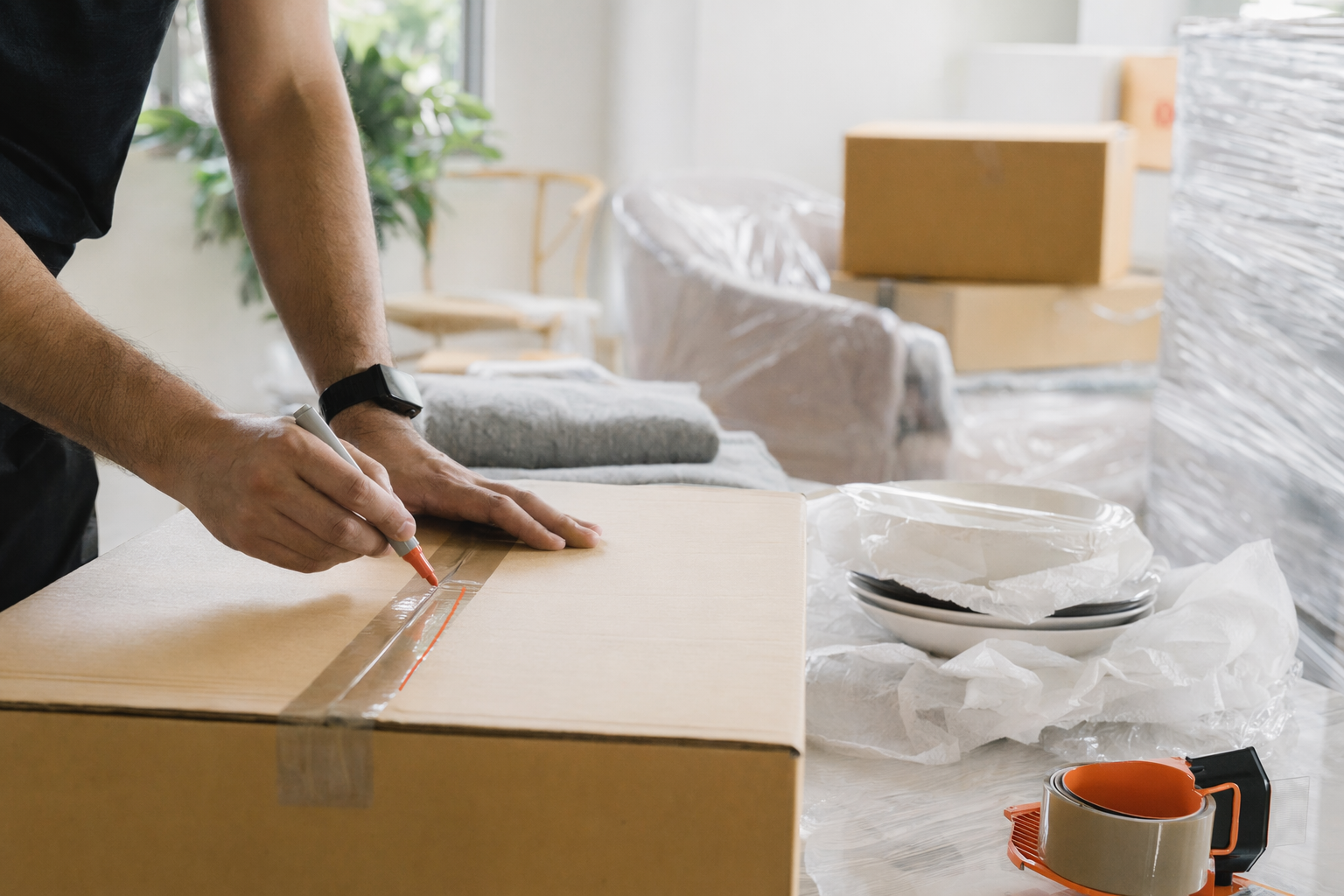
Start with a plan (so packing feels smaller)
Move like you’re organizing a restaurant closing shift: clear, labeled, and ready to reopen.
If you pack in one big rush, kitchen boxes get messy fast—especially glass, small appliances, and spices. A smart plan keeps things safe and makes unpacking easier.
MoveLantern is a free matching + information service, not a moving company. If you want help finding a local or long-distance mover, you can get matched with licensed, vetted options and choose what fits your move.
Before you tape anything, gather supplies and do a quick kitchen inventory. Then pack in stages, not all at once.
Packing steps for a safer kitchen (and faster unpacking)
1. Choose a packing day system: Pack one zone at a time—cabinets, then drawers, then pantry, then appliances. Stop when that zone is done, so you don’t lose track.
2. Protect fragile items the right way: Wrap plates, bowls, and glasses individually with packing paper (not newspaper if you can avoid it). Use padding between pieces.
3. Label by room + contents: Write “KITCHEN” plus the exact box contents (example: “KITCHEN—Mugs & Cups”). Label fragile boxes clearly with large “FRAGILE.”
4. Keep small stuff in small containers: Use sturdy bins or small boxes for utensils, gadget parts, measuring tools, and lids. Tape the container shut, then put it in a labeled outer box.
5. Pack spices and pantry items thoughtfully: Only pack items that are allowed and safe to move. Seal items tightly and keep them upright. If anything is outdated or leaking, don’t move it—save space.
6. Pack appliances last and prepare them: If you move countertop appliances, clean them, dry them fully, and tape loose cords so they don’t tangle. Pack each appliance with extra padding.
7. Use the “heavy bottom, light top” rule: Heavy boxes on the bottom floor of your stack, lighter boxes on top. Don’t overload one box—kitchen boxes become heavy quickly.
8. Make a first-night box: Pack a small box you can open on arrival—paper towels, basic cups, a knife (if you’re comfortable), a few plates, dish soap, trash bags, and a can opener.
9. Do a quick tape-and-check: Seal every seam, add corner protection for fragile boxes, and double-check that lids are closed and nothing is loose.
10. Keep inventory simple: On the outside of the main kitchen boxes, write a short list. If you’re using multiple boxes, add “Kitchen 1 of 5,” “Kitchen 2 of 5,” etc.
What to pack (and what to consider leaving behind)
In a fresh start move, it can be smart to simplify. Kitchens hold lots of duplicates and “maybe I’ll use it later” items.
Consider donating or leaving behind items that are damaged, outdated, or you haven’t used in a long time. This reduces packing time and can lower moving costs.
For long-distance moves, professional movers often price based on weight/volume. That means every extra box can add to the total. Keep the kitchen essential, safe, and manageable.
How to pack for different kitchen categories
A kitchen isn’t one type of item. Use category packing so nothing is mixed randomly.
Dishes (plates, bowls, servingware): Pack flat with padding between layers, or use a divider system. Keep stacks small enough that the box can stay sturdy.
Glassware (mugs, drinking glasses): Wrap each piece. Don’t place heavy items on top of fragile boxes.
Cookware (pots, pans): Wrap handles and stack with paper between cooking surfaces so they don’t scratch or stick.
Utensils and tools: Put knives and sharp tools in a protected sleeve or wrap and mark the box “HANDLE WITH CARE.” Small tools should go in bins so parts don’t scatter.
Spices and pantry items: Seal and secure. If you’re unsure whether an item should be moved (for example, something with a strong leak risk), don’t guess—leave it behind. When in doubt, start fresh at your destination.

Choose the right mover—and verify licensing (especially for interstate)
If you’re hiring help, packing can be part of your plan—but moving companies are also responsible for safe handling. Before you choose anyone, focus on licensing and a clear written estimate.
Here are two key rules:
1. Interstate movers must be FMCSA-registered and have a USDOT number. Interstate movers carry household goods across state lines and should be able to show their USDOT details.
2. Get a written estimate from the mover. Don’t rely on verbal pricing.
If you’re unsure where to begin, you can use MoveLantern to get matched and compare options. Then verify the mover’s license/registration yourself before you agree to anything.
If you want to budget better, read moving-costs for typical kitchen-related and overall move pricing factors—like distance, season, weight/volume, and how much packing you do yourself.
Avoid common moving scams (kitchen boxes included)
Moving scams often show up as “too-good-to-be-true” pricing or pressure tactics. Kitchens are a frequent target because they’re full of valuable items.
Watch for these red flags:
- Lowball quote with no written estimate or no clear list of what’s included.
- Large cash deposits or requests for payment methods that don’t match the contract.
- No in-person or video review (when needed) for accurate weight/volume and inventory.
- “Hostage load” risk: the mover won’t release your items until you pay more. This can happen when terms are unclear.
- No clear bill of lading (the contract/receipt for your move).
Moving terms in plain language:
- Bill of lading: the paperwork that lists details of your move and acts like your receipt/contract.
- Valuation: the level of liability coverage. It’s not the same as insurance, so ask questions and read the documents carefully.
- Binding estimate: a price locked in (in writing) before the move.
- Non-binding estimate: a good-faith guess that can change.
- Not-to-exceed / guaranteed-not-to-exceed: the most you should pay, which protects you.
MoveLantern is free for people who are moving. We connect you with information and licensed options—but you still make the final hiring choice and should verify licensing yourself.
Pack your kitchen by zones, protect fragile items, label everything, and use MoveLantern to compare licensed movers with clear written estimates—especially for interstate moves.
FAQ
Common questions
Should I pack my kitchen dishes in one big box or many smaller boxes?
Use multiple sturdy boxes. Many smaller boxes are easier to stack safely and pack more evenly. Label each box clearly (example: “Kitchen—Plates & Bowls”) so unpacking is faster.
Is it okay to leave out food items during a move?
In most cases, it’s smarter to leave out open, expired, or leaking pantry items and start fresh. For sealed, non-leaking items, pack them securely and upright. If you’re unsure, don’t guess—simplify and reduce risk.
What’s the safest way to pack knives and sharp tools?
Wrap knives so blades are protected, and place them in a sleeve or strong box with padding. Clearly label the box so handlers know to use care. Keep it together with other kitchen tools rather than mixing loose items.
Do interstate movers have special licensing requirements?
Yes. Movers that carry household goods across state lines generally must be registered with the FMCSA and have a USDOT number. Verify the USDOT details yourself before hiring.
How do estimates work if I’m doing some packing myself?
Your written estimate should reflect what’s included (for example, whether you’re packing or the mover is packing). Costs vary a lot based on weight/volume, distance, and season. Always get the estimate in writing and ask whether it’s binding, non-binding, or not-to-exceed.