Help
Packing TVs and Electronics Safely
Packing TVs and electronics the right way helps protect your gear and keeps moving day calmer. Here’s a simple plan, plus a free way to find licensed, vetted movers who can help in your language.
Start with a quick plan
Before you pack, take a minute to sort what needs extra care. TVs, monitors, game consoles, speakers, routers, laptops, and chargers should be handled differently from books or clothes.
If you are hiring help, ask whether the mover offers packing, crating, or special handling for fragile electronics. MoveLantern is a free matching service, not a moving company, and we help you connect with licensed, vetted movers for local, long-distance, or interstate moves.
For interstate household moves, movers must be registered with the FMCSA and have a USDOT number. Always verify that number yourself before you hire anyone.
How to pack TVs and electronics safely
1. Back up files first. Save photos, documents, and anything important before the move. That way you are protected if a laptop or drive is damaged.
2. Power down and unplug everything. Remove discs, games, batteries, memory cards, and cables. Put cords in labeled bags so setup is easier later.
3. Use the original box if you still have it. That is often the best fit for a TV, monitor, or speaker. If not, use a sturdy box with plenty of padding.
4. Wrap each item carefully. Use anti-static materials when you can, then add bubble wrap or soft padding around corners and screens. Never let the screen touch hard surfaces.
5. Keep devices upright when needed. Flat-screen TVs are usually safest standing upright, not laid flat, unless the manufacturer says otherwise.
6. Cushion empty space. Fill gaps with packing paper, foam, or soft blankets so items do not shift inside the box.
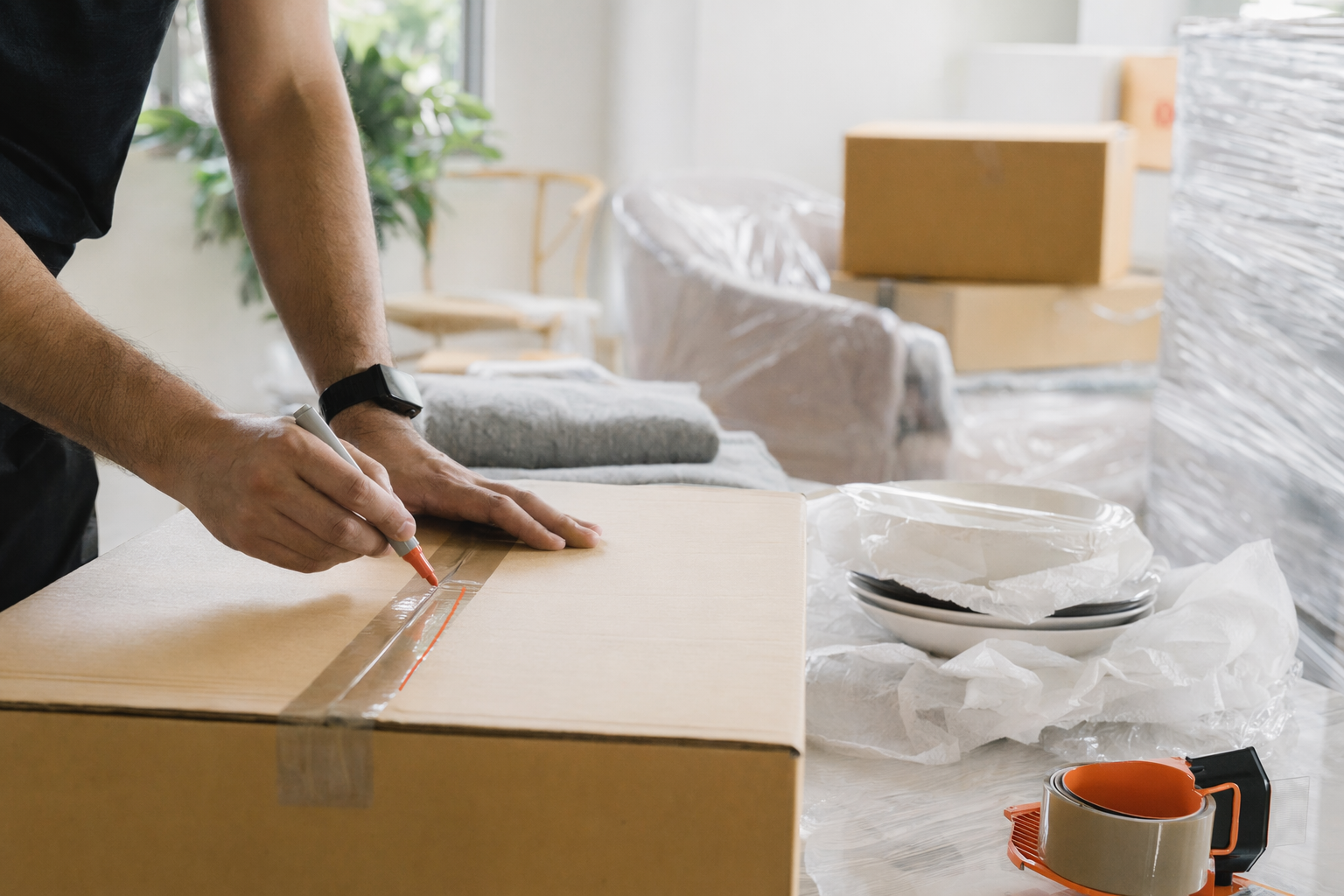
7. Label the box clearly. Write “Fragile,” “This Side Up,” and the room it belongs in. Do not stack heavy boxes on top.
8. Keep valuable small electronics with you if possible. Items like laptops, tablets, and chargers are often easier to carry in your car than to put on the truck.
If you are not sure how to handle a specific item, ask the mover for written packing guidance before moving day.
What movers can help with
Some movers can pack electronics for you, provide special cartons, or build custom crates for delicate items. Others only transport boxes that you pack yourself.
Packing help usually adds to the total moving cost. Typical ranges vary a lot, but professional packing is often about $300-$2,000+ depending on how much needs to be packed, how fragile it is, and your city and season. Always get it in writing.
If you are comparing movers, ask for the estimate type in plain words:
- Binding estimate - a price the mover locks in, in writing, before the move.
- Non-binding estimate - a good-faith guess that can change.
- Not-to-exceed / guaranteed-not-to-exceed - the most you'll pay, which protects you.
A written estimate is what matters. Verbal promises do not protect you.
Watch for warning signs before you hand over your electronics
A careful mover will usually answer questions clearly, do a real survey of your home by video or in person, and give you written terms. Be cautious if someone gives a very low price without seeing what you own.
Common scam signs include:
- A large cash deposit before the move
- No written estimate
- No in-home or video survey
- Vague company name or no USDOT number for interstate moves
- Pressure to decide immediately
- A mover who later holds your belongings and asks for more money to deliver them. That is often called a hostage load.
If a mover says they handle interstate moves, check the USDOT number on the FMCSA website yourself. For local moves, rules vary by state, so it is smart to check your state licensing too.

A simple story from a real kind of move
A family moving into their first apartment in the US wanted to bring a TV, a laptop, and a game console without damage. They took photos of cable setups, saved their files, packed the small electronics in labeled boxes, and asked for written estimates from licensed movers in their area.
Through MoveLantern, they matched with movers who could speak with them in their preferred language and explain the packing options clearly. Because they compared estimates early, they could choose a mover that fit their budget and avoid last-minute stress. The move still took effort, but the electronics arrived organized and ready to use.
If you are comparing costs and next steps
For planning, it helps to know the bigger move budget too. Typical US ranges, which vary a lot, are about $400-$1,500 for a local 1-2 bedroom move, $1,000-$3,500 for a local 3-4 bedroom move, and $2,000-$8,000+ for long-distance or interstate moves, depending on weight, distance, season, and location.
If you want help finding the right team, use our services to learn how matching works, or go straight to get matched. If you are also comparing overall move pricing, our moving cost guide can help you plan ahead.
Help is often available in your own language, and matching is free.
Pack electronics in sturdy, padded boxes, keep key devices backed up and labeled, and compare written estimates from licensed movers before you hire.
FAQ
Common questions
Should I pack my TV myself or ask the mover to do it?
Either can work. If you still have the original box and you are comfortable handling it, packing it yourself is fine. If the TV is large, fragile, or expensive, ask the mover about professional packing or custom crating in writing.
Can I put laptops and chargers on the moving truck?
Yes, but many people keep laptops, tablets, and important cords with them in the car so they stay close and easy to access. Always back up files first.
What is valuation, and is it the same as insurance?
No. Valuation is the level of liability coverage your mover provides if something is lost or damaged, and it is not the same as insurance. Ask the mover to explain the options in writing before you book.
How do I know if an interstate mover is licensed?
Check the mover’s USDOT number with the FMCSA. Interstate movers that carry household goods must be registered, and it is smart to verify the license yourself before hiring.