Help
How Many Boxes Will You Actually Need?
Before you buy boxes, do a quick reality check. This guide helps you estimate how many moving boxes you’ll need, plan packing costs, and then get a free match to licensed local or long-distance movers.
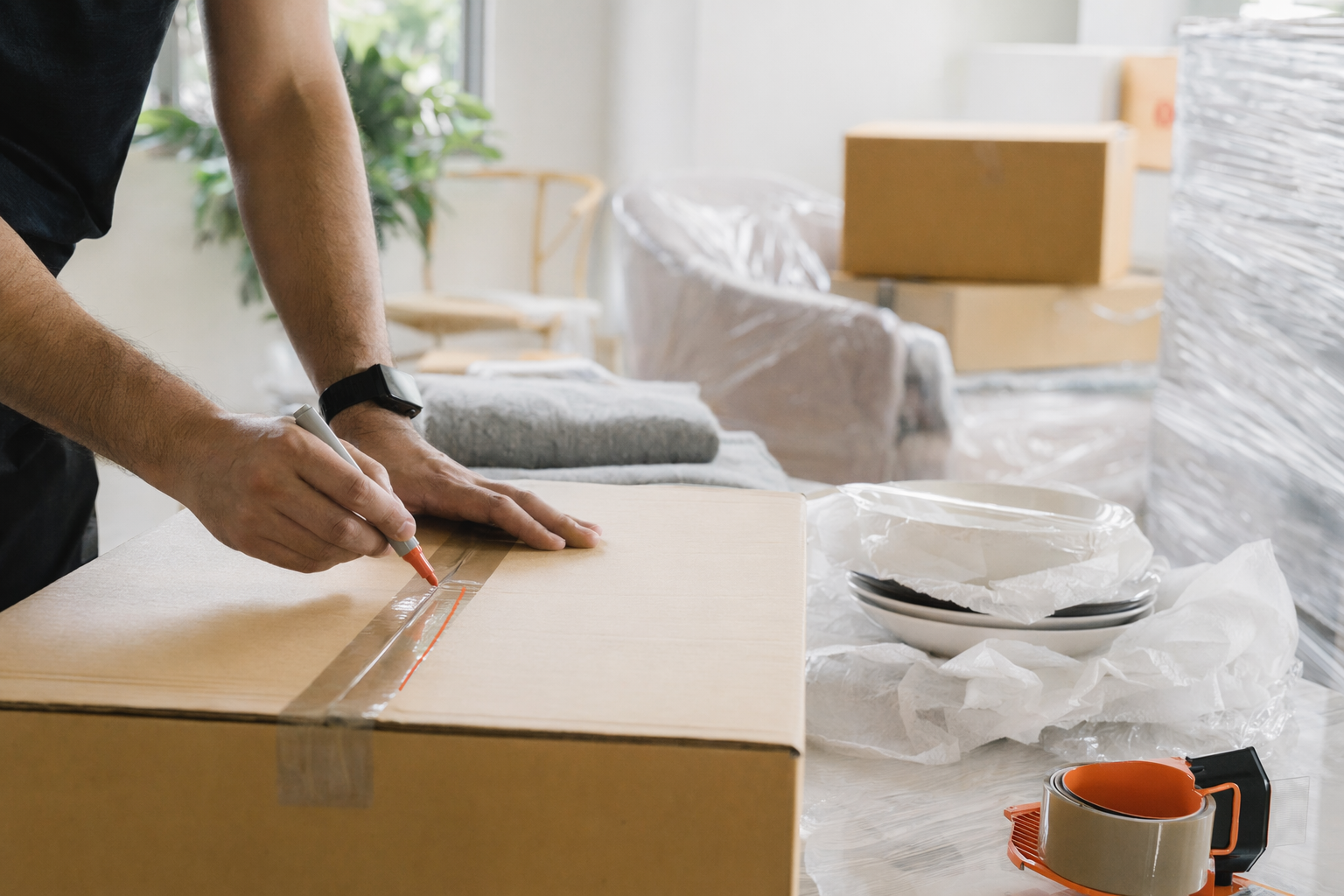
Start here: boxes depend on what you pack (not just your home size)
Box counts are mostly about how much stuff you have and how you pack—not the number of bedrooms.
If you’re moving into a first US home (or starting fresh), you may have fewer items than you think. If you’ve collected kitchenware, seasonal clothes, books, and “keep later” boxes, you’ll use more.
Use the steps below to estimate boxes in a practical way. Then compare packing help versus DIY—professional packing can save time, but it adds cost. For cost planning, see moving-costs.
- Tip: if you’re not sure, it’s usually better to estimate slightly high than run short mid-pack.
Quick box estimate (simple method you can do in 15 minutes)
1. Pick a room-by-room list: bedroom(s), living room, kitchen, bathroom, closets, and any office.
2. For each room, estimate how many “box-level tasks” you have. Example: “books,” “clothes,” “kitchen small items,” “linens,” “misc.”
3. Assign a rough box range:
- Light clothes/linens (wardrobe, towels, sheets): often fewer per room if you pack efficiently, but bulky items take space.
- Kitchen and small household items: usually many boxes because items are dense.
- Books/media: typically more boxes and heavier boxes.
- Decor (fragile items): fewer boxes, but you may need extra padding and smaller boxes.
4. Add a packing buffer of a few extra boxes for “unknowns” (cords, chargers, cleaning supplies, seasonal items).
- If you keep a lot of heavy books and glassware, your box count can be similar to other households—but your weight cost can be higher.
Typical ranges: how many moving boxes people often need
These are planning ranges, not exact counts. Your real number varies based on how full your closets are, how many kitchen items you own, whether you have books, and how much you purge.
- Studio / 1-bedroom: often ~20–45 boxes
- 2-bedroom: often ~35–70 boxes
- 3-bedroom: often ~60–100 boxes
- 4-bedroom: often ~90–140 boxes
If you’re packing lots of fragile items (dishes, glass decor) or have many books, you may need more boxes or more (smaller) boxes to pack safely.
Remember: professional movers sometimes supply/prepare packing materials depending on the service. If you’re hiring a mover, ask what’s included in their packing approach before you buy supplies.
- Boxes are not the whole cost. Packing materials (tape, paper, bubble wrap) and labor time can change the total.
Estimate your packing supplies (so the boxes don’t run short)
Boxes are only part of the plan. Most people underestimate packing supplies.
Plan for:
1. Moving boxes (different sizes). Smaller boxes for heavy items like books.
2. Strong packing tape (enough to seal well—don’t skimp).
3. Cushioning: packing paper and/or bubble wrap for fragile items.
4. Marking: a marker + labels so unpacking is fast.
5. Bagging/containment: trash bags for linens, small bins for hardware, zip bags for cords.
If you’re considering professional packing, typical costs for packing services can run roughly $300–$2,000+ depending on size, volume, and how much is packed by professionals. The only number that counts is what the licensed mover writes into your estimate.
- Practical rule: label boxes by room and by priority (“OPEN FIRST,” “FRAGILE,” “KITCHEN ESSENTIALS”).
Choose the right moving plan: DIY packing, partial help, or full packing
A smooth move is usually the one you can manage. If your schedule is tight, professional packing can reduce stress and protect fragile items.
For cost planning, it helps to separate these decisions:
- How much you pack yourself
- Whether you need packing materials supplied
- The moving distance (local vs long-distance)
- Your belongings’ weight/volume
Typical ranges vary a lot, but as a starting point:
- Local moves (about 1–2 bedrooms): roughly $400–$1,500
- Local moves (about 3–4 bedrooms): roughly $1,000–$3,500
- Long-distance/interstate moves: roughly $2,000–$8,000+ depending on weight and distance
Want help comparing options without guessing? MoveLantern is a FREE matching service, not a moving company. We help you find licensed, vetted movers for local and long-distance moves. You can start here: get-matched.
- Interstate movers that carry household goods must be registered with the FMCSA and have a USDOT number—verify it before you hire.

Avoid moving scams when you’re also buying boxes and supplies
Even if you’re just planning boxes, stay alert when you request estimates.
Common red flags:
- A mover won’t provide a written estimate (in person or by approved method).
- Very low quotes with unclear details.
- Asking for large cash deposits upfront.
- “We’ll hold your items hostage” if more money is demanded later.
Before you hire, verify basic licensing yourself. For interstate moves, confirm the mover is FMCSA-registered and has a USDOT number. For your notes, “USDOT number” is a federal identifier you can look up, and “bill of lading” is the contract/receipt for your move.
If you want to compare options calmly and safely, use services and then request matches through get-matched. Matching is free—never share payment card numbers or immigration/government ID documents.
- Safety mindset: get everything in writing, and confirm details before moving day.
A simple planning checklist (use this today)
1. Do the room-by-room estimate and pick your target box range.
2. Add a small buffer for “unknowns” and fragile packing.
3. Decide your packing level: self-packed, partial help, or full packing.
4. Create a “first-night” box list (toiletries, chargers, bedding, basic kitchen items).
5. Book estimates for your move date window and ask what’s included.
6. Verify licensing (especially for interstate moves).
7. Keep your estimate paperwork safe. Understand it:
- Binding estimate: a price the mover locks in, written before the move.
- Non-binding estimate: a good-faith guess that can change.
- Not-to-exceed/guaranteed not-to-exceed: the most you’ll pay, which protects you.
When you’re ready to compare movers, MoveLantern can help you get matched to licensed options—free for you. Start with get-matched.
- Move tip: schedule packing materials and tape before you start boxing. That prevents delays.
An anonymized story: planning boxes, then planning the move
A family relocating for work planned a fresh start into their first US home. They had a 2-bedroom apartment worth of items—clothes, kitchen basics, some books, and a few fragile decorations. They weren’t sure how many boxes to buy, so they used a room-by-room approach and set a target box range. They added a buffer for the “small stuff” like chargers, cleaning supplies, and seasonal items.
Instead of guessing on moving cost, they also requested written estimates from licensed movers. When they compared options, they focused on what was included, whether a binding or not-to-exceed estimate was offered, and how the mover would handle fragile items. They avoided anyone who wouldn’t provide clear details.
Through MoveLantern (a free matching service, not a moving company), they were matched with licensed, vetted local and long-distance options and could compare calmly. They didn’t pay for a guess—they chose based on what was written in the estimate and verified the basic licensing for their situation.
On moving day, they felt prepared because their boxes and labels were ready, their “first-night” essentials were packed separately, and their moving plan matched the reality of their inventory.
- Outcome lesson: planning boxes + getting a written estimate beats buying supplies blindly.
Estimate your box count by room and item type, plan supplies too, then get a free match to licensed movers so you can compare written estimates confidently.
FAQ
Common questions
If I buy too many boxes, will it ruin my budget?
Usually not. Boxes are far cheaper than moving delays. Buying a small buffer can prevent the most expensive problem: running out mid-pack and having to scramble. If you’re very cost-conscious, estimate slightly high, then borrow or reuse sturdy boxes when possible.
How do I estimate boxes for books and fragile items?
Books are dense and heavy. Plan smaller boxes for books and seal them carefully. For fragile items, you may need extra cushioning and smaller boxes for safer packing—even if the total box count is lower than you expect.
Do movers count boxes for the price?
Movers usually price based on what fits in the truck—often weight, volume, distance, and services—not just box count. Box number can be a clue for planning, but the real driver is how much your belongings weigh and take up space.
What’s the difference between a binding estimate and a non-binding estimate?
A binding estimate is a price the mover commits to in writing before the move. A non-binding estimate is a good-faith guess that can change if inventory or conditions differ. A not-to-exceed (guaranteed not-to-exceed) gives you the most protection because it’s the maximum you’ll pay.
I’m moving out of state. How can I check the mover is legit?
For interstate household moves, the mover must be registered with the FMCSA and have a USDOT number. You can verify this yourself before hiring. Also insist on a written estimate and keep everything documented.